Introduction
Google I/O has long stood as a pivotal event in the technology calendar, a forum where Google unveils its vision for the future, showcasing advancements that shape the digital landscape for developers and consumers alike. As we cast our gaze forward to Google I/O 2026, the anticipation is palpable, fueled by the relentless pace of innovation, particularly in artificial intelligence. This year, the keynote is expected to be an unprecedented display of AI prowess, demonstrating how Google plans to weave intelligent systems even more deeply into every facet of our digital and physical lives.
The 2026 edition of Google I/O is poised to be a landmark event, not just for the incremental updates to existing platforms, but for potentially transformative revelations concerning Google’s AI capabilities. From the evolution of its foundational models like Gemini to the seamless integration of AI into Android, Pixel hardware, and ambient computing, the focus will undoubtedly be on intelligence, personalization, and efficiency. This article delves into the most significant predictions and highly anticipated announcements, offering a comprehensive look at what developers, tech enthusiasts, and everyday users can expect from the Google I/O 2026 keynote. Prepare to explore a future where AI is not just a feature, but the very operating system of our interconnected world.
Comprehensive Discussion: The Future Unveiled
The Evolution of Gemini: Beyond Generative AI
By 2026, Google’s flagship AI model, Gemini, is projected to have matured significantly, moving beyond its initial generative capabilities to become a truly agentic and proactive intelligence. The Google I/O 2026 Keynote will likely highlight “Gemini Ultra 2026” or an even more advanced iteration, showcasing a model that can not only understand and generate complex information across modalities (text, image, audio, video) but also autonomously execute multi-step tasks.
- True Multimodality and Real-World Interaction: Expect demonstrations of Gemini seamlessly processing and generating content across all forms of media, including interpreting complex physical environments via camera inputs and responding with nuanced, context-aware actions. This could involve real-time translation and interpretation of spoken conversations, visual analysis of objects, and dynamic interaction with digital interfaces based on user intent.
- Agentic AI Capabilities: Gemini 2026 is expected to exhibit advanced agentic behavior, allowing it to act as a personal assistant capable of executing complex workflows. Imagine delegating tasks like planning an entire trip (booking flights, hotels, creating itineraries, handling changes) or managing elaborate professional projects, with Gemini proactively identifying needs and offering solutions. This moves AI from a tool to a collaborative partner.
- Ethical AI and Safety by Design: Google will undoubtedly emphasize its ongoing commitment to responsible AI development. The keynote will likely detail new safety protocols, transparency tools, and ethical guardrails integrated directly into Gemini, ensuring its powerful capabilities are used beneficently and without bias. Discussions on privacy-preserving AI and federated learning will also be central.
- Ubiquitous Integration: Gemini’s enhanced capabilities will be showcased across the entire Google ecosystem, from Search and Workspace to Cloud and Android, making every interaction more intelligent and personalized.
Ambient Computing: An AI-Driven Invisible Revolution
Google’s long-standing vision of ambient computing – technology that is helpful when you need it and fades into the background when you don’t – will reach new heights with advanced AI integration. I/O 2026 will illustrate how AI makes this vision a tangible reality, creating truly intelligent environments.
- Hyper-Personalized Smart Homes: Nest devices and Matter-compatible smart home ecosystems will be powered by AI that learns individual and household preferences with unprecedented accuracy. This could mean predictive climate control that anticipates your arrival, adaptive lighting based on mood and time of day, and security systems that distinguish between familiar and unfamiliar individuals with greater precision.
- Proactive Assistance and Contextual Awareness: AI will enable devices to anticipate needs before they are explicitly stated. Your phone, watch, or car could proactively offer solutions or information based on your calendar, location, habits, and even physiological data, without constant prompting.
- Seamless Cross-Device Experiences: Expect demonstrations of seamless handoffs and shared contexts between Pixel phones, smartwatches (Wear OS), smart displays, and even vehicles. AI will manage this flow, ensuring consistency and continuity in user experience.
Android 17: The Intelligent OS
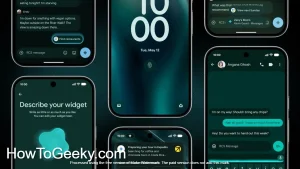
The next iteration of Google’s mobile operating system, presumably dubbed Android 17 (or a similarly named version for 2026), will feature an unparalleled level of AI integration, fundamentally transforming the user experience.
- Deep System-Level AI: Beyond discrete AI features, Android 17 will boast a deeply integrated AI core that optimizes performance, battery life, and security dynamically. This could include predictive resource allocation, adaptive interface adjustments based on usage patterns, and real-time threat detection.
- Personalized & Adaptive UI: The user interface itself will become more dynamic and personalized, adapting layouts, app suggestions, and notification priorities based on learned user behavior and current context. Think of an OS that anticipates your next action and prepares the environment accordingly.
- Enhanced Privacy and Security: With increased AI capabilities comes a greater need for robust privacy. Android 17 will likely introduce sophisticated on-device AI processing for sensitive data, minimizing cloud reliance and enhancing user control over personal information. New security features leveraging AI for anomaly detection and proactive defense against malware will also be highlighted.
- AI for Accessibility: Significant advancements in AI-powered accessibility features, such as advanced real-time transcription, enhanced screen readers with deeper context understanding, and more intuitive voice controls, are highly probable.
Pixel Hardware: The AI Advantage Amplified
The keynote will undoubtedly feature new Pixel hardware, likely the Pixel 11 series and potentially new iterations of the Pixel Fold, Pixel Watch, and Pixel Buds. These devices will serve as the ultimate showcases for Google’s on-device AI capabilities.
- Next-Generation Tensor Chip: A new Tensor chip (perhaps the Tensor 7 or 8) will be at the heart of the Pixel devices, offering unprecedented on-device AI processing power. This will enable faster, more private, and more sophisticated AI features without relying as heavily on cloud computation.
- Revolutionary Computational Photography: Pixel cameras, already leaders in computational photography, will leverage advanced AI for even more astonishing results. Expect features like hyper-realistic video stabilization, intelligent scene reconstruction, and advanced low-light performance that mimics professional equipment, all powered by on-device AI.
- Advanced Health & Wellness Tracking (Pixel Watch 3): The next Pixel Watch will integrate advanced AI for more accurate and proactive health monitoring, providing personalized insights, early detection of potential health issues, and seamless integration with other health platforms.
- New Form Factors and Interactions: Speculation points to potential advancements in foldable technology or entirely new form factors that leverage AI to create novel interaction paradigms.
Google Cloud AI and Enterprise Solutions
Google I/O isn’t just for consumer tech; it’s also a critical platform for enterprise innovations. The 2026 keynote will showcase how Google Cloud is empowering businesses with cutting-edge AI.
- Vertex AI Enhancements: Expect significant updates to Vertex AI, Google’s unified platform for machine learning development. New tools for MLOps, ethical AI model governance, and custom model deployment will be central.
- Industry-Specific AI Solutions: Google will highlight AI solutions tailored for specific industries such as healthcare, finance, retail, and manufacturing, demonstrating real-world impact and efficiency gains.
- Responsible AI in the Enterprise: With increasing regulatory scrutiny, Google will likely introduce new frameworks and tools for businesses to ensure their AI implementations are fair, transparent, and compliant.
Beyond the Core: Other Potential Announcements
While AI and core platforms will dominate, other areas of the Google ecosystem are also ripe for significant updates:
- Chrome OS & AI: Expect Chrome OS to receive substantial AI integrations for enhanced productivity, security, and a more adaptive user experience, particularly for enterprise and education segments.
- Google Search Evolution: Further integration of generative AI within Search, offering more conversational interactions, complex query understanding, and personalized results that go beyond simple links.
- Google Workspace Innovations: AI-powered features for enhanced collaboration, automated content generation in Docs and Slides, and intelligent meeting summaries in Meet.
- AR/VR Progress: Updates on Google’s augmented and virtual reality initiatives, potentially showcasing advancements in Project Starline or new developments in spatial computing platforms.
Frequently Asked Questions (FAQ) about Google I/O 2026
Q1: What is Google I/O?
Google I/O is Google’s annual developer conference, where the company typically unveils significant updates to its software platforms (like Android, Chrome OS, Wear OS), new hardware, and groundbreaking advancements in artificial intelligence. It’s a key event for developers to learn about new tools and APIs, and for the public to get a glimpse into Google’s future vision.
Q2: When is Google I/O 2026 expected to take place?
Historically, Google I/O takes place in May each year. While an exact date for 2026 has not yet been announced, it is highly anticipated to follow this pattern, likely in mid-May.
Q3: Will Google I/O 2026 feature new hardware announcements?
Yes, it is highly probable. Google I/O often serves as the platform for unveiling new Pixel devices (e.g., the Pixel 11 series), updates to the Pixel Watch, Pixel Buds, and potentially new or updated form factors like the Pixel Fold. These hardware announcements typically highlight the capabilities of Google’s latest AI and software innovations.
Q4: How will AI significantly impact Android 17?
For Android 17, AI is expected to move beyond discrete features to become a deeply integrated, system-level core. This will manifest in hyper-personalized user interfaces, proactive assistance, dynamic performance optimization, enhanced security, and advanced accessibility features, all driven by sophisticated on-device AI processing and the latest iterations of Gemini.
Q5: What are the primary themes expected for Google I/O 2026?
The overarching theme for Google I/O 2026 will undoubtedly be AI, particularly the advanced capabilities and widespread integration of Gemini. Key specific themes include:
- The evolution of Gemini into a more agentic and multimodal AI.
- Ambient computing, creating truly intelligent and responsive environments.
- Deep AI integration across all Google platforms, including Android 17 and Pixel hardware.
- Advancements in responsible AI development, safety, and privacy.
- New developer tools and platforms for building AI-powered applications.
Conclusion
Google I/O 2026 stands on the precipice of a new era, one where artificial intelligence is not merely a component but the foundational operating principle for Google’s entire ecosystem. The keynote is poised to deliver a cascade of groundbreaking AI reveals, showcasing how Gemini’s evolution will power a future of truly ambient computing, intelligent Android experiences, and a new generation of Pixel hardware that leverages on-device AI like never before.
The predictions outlined herein paint a picture of a world where technology is more intuitive, personalized, and proactive, seamlessly integrating into our lives while prioritizing ethics and user control. For developers, Google I/O 2026 will offer an expansive toolkit to build the next wave of AI-powered applications. For users, it promises a leap forward in how we interact with our devices and digital services. As the countdown to Google I/O 2026 begins, the anticipation for these transformative announcements is not just warranted, but essential for understanding the trajectory of technology in the coming years. Google is set to redefine what’s possible, and the world will be watching.
“`