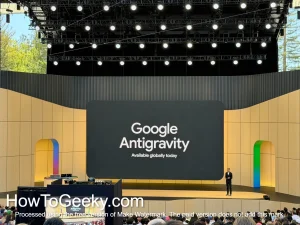
Google Antigravity 2.0 has officially shattered traditional software development standards following its massive reveal at Google I/O 2026. This May 21, 2026 update explores how Google’s newly launched standalone, agent-first platform is rendering old AI chat prompt extensions completely obsolete.
For the past year, AI-assisted coding felt like a repetitive game of ping-pong. Developers would copy a bug, paste it into an AI sidebar, generate a snippet, and manually debug the code. While tools like Cursor and GitHub Copilot paved the way, they still treated artificial intelligence as a passive copilot rather than an autonomous driver.
That barrier is officially gone. With the surprise rollout of Google Antigravity 2.0 alongside the blazing-fast Gemini 3.5 Flash model, tech infrastructure is shifting from basic code generation to full-scale autonomous software execution.
Table of Contents
1. What is Google Antigravity 2.0? Moving Past the IDE
Originally launched in late 2025 as a modified Visual Studio Code fork, Google used its keynote this week to take the “IDE” completely out of Antigravity. As reported by Google Antigravity’s public technical documentation, version 2.0 is now a fully standalone, native desktop application available for macOS, Windows, and Linux.
Instead of being a code editor with AI bolted onto the side, Antigravity 2.0 is built entirely around an **agent-first architecture**. It features two major interfaces:
- Editor View: A clean workspace with an integrated agent sidebar for core code composition.
- Manager View: A localized control center designed to orchestrate, track, and manage multiple parallel AI agents executing background tasks across different repository folders simultaneously.
2. The 12-Hour Operating System Experiment
To prove the economic and technical readiness of agentic AI workflows, Google’s engineering team showcased a mind-blowing live demo on stage. They tasked Google Antigravity 2.0 with building the entire core framework of a functioning operating system from scratch.
Running on top of the newly optimized Gemini 3.5 Flash architecture—which processes tokens at a blinding 289 output tokens per second—the platform deployed a squad of 93 autonomous AI subagents. The subagents successfully completed the core operating system framework in just 12 hours, consuming over 2.6 billion tokens for a processing cost of under $1,000. When a live test run of the game *Doom* initially crashed due to a lack of keyboard drivers, developers used the platform to generate and inject the missing drivers live on stage in seconds.
3. Groundbreaking Agentic Features: Subagents and Cron Tasks
The architectural updates rolling out globally today on May 21, 2026, position Antigravity directly against aggressive tools like Claude Code and OpenAI Codex. The core feature upgrades include:
- Programmatic Subagents: The main Antigravity agent can now autonomously spin up, define, and dispatch modular subagents to handle distinct parts of a codebase without cluttering your primary context window.
- Asynchronous Background Loops: Long-running software compilations, server diagnostic scripts, and browser testing routines are offloaded to background workflows so the primary app interface never stalls.
- Scheduled Cron Tasks: Developers can now set specific timers, forcing agents to pull code updates, run continuous integration checks, and refactor codebases on an automated cron schedule.
- New Slash Commands: Implementation of the
/goalparameter (runs tasks completely to finish without human interruption) and/grill-me(forces the agent to ask strict clarifying questions before rewriting files).
4. Next-Gen Ecosystem Integration: Google AI Studio to Production
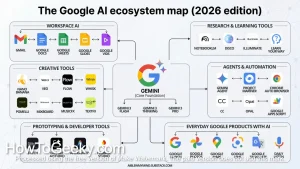
Google has effectively removed infrastructure friction by chaining its tools together. Developers can start vibe-coding an application locally or via the mobile application, and then export the entire state into Google Antigravity with a single click.
Furthermore, with built-in cross-platform terminal sandboxing, automated credential masking, and hardened Git policies, your development stack remains highly secure even when autonomous agents are generating multi-file pull requests. If you are concurrently optimizing your hosting architecture for these kinds of advanced web and script deployments, make sure to read our complete server configuration guide.
5. Google Antigravity Pricing and Bonus Credits (Expiring May 25)
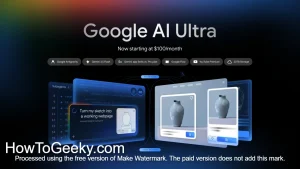
Along with the software launch, Google restructured its AI subscription tiers to accommodate heavy developer usage. A new **$100/month AI Ultra tier** has been introduced right between the standard $20 Pro plan and the enterprise flagship tier (which dropped from $250 to $200/month). This new middle tier grants users 5x the standard Antigravity processing limits.
As a launch promo, Google is offering **$100 in immediate bonus credits** to new and existing Ultra subscribers. However, you must claim this bonus inside the application before the offer officially expires next week on **May 25, 2026**.
Traditional manual software engineering is changing forever. Download the standalone desktop client, transition your outdated setups to the new Antigravity CLI, and let autonomous multi-agent systems do the heavy architectural lifting for you.
Trending US Tech Updates: Keeping up with other massive digital infra changes this week? Check out the latest on why Bluesky went down during its recent outage, or read through the breakdown of the new Verizon promotions designed to offset corporate rate hikes.