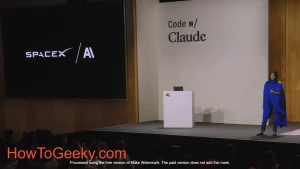
The deal, whose financial terms remain undisclosed but are undoubtedly astronomical, highlights a critical reality: access to immense computational resources is now the ultimate bottleneck and differentiator in the hyper-competitive AI landscape. For Anthropic, known for its commitment to responsible AI development and its Claude series of large language models (LLMs), securing Colossus provides an unparalleled runway for innovation, promising accelerated progress in areas ranging from model scaling and architectural breakthroughs to rigorous safety alignment and interpretability research. This article delves into the intricacies of this massive compute deal, its strategic implications for Anthropic, Elon Musk, and the broader AI ecosystem, and the challenges and opportunities presented by such a monumental undertaking.
Inside the Massive 220,000-GPU Compute Deal
The Colossus Supercomputer: A Titan Emerges
The “Colossus” supercomputer, until now largely a subject of industry whispers and speculative reports, has officially emerged as a formidable player in the global AI infrastructure. While Elon Musk has been vocal about the compute needs for his own ventures like xAI and Grok, the revelation that he has developed and is now leasing such an immense infrastructure to a third party like Anthropic is a testament to the sheer scale of his ambition and investment in foundational compute capabilities. The heart of Colossus lies in its sheer processing power, powered by an astounding 220,000 Graphics Processing Units (GPUs).
- Unprecedented Scale: To put 220,000 GPUs into perspective, even the largest existing AI superclusters typically boast tens of thousands of GPUs. This figure places Colossus among the most powerful, if not the most powerful, AI-dedicated supercomputers ever assembled. It signifies a compute capacity that could significantly outstrip even the most advanced systems currently deployed by tech giants for their cutting-edge AI research.
- State-of-the-Art Hardware: While specifics are proprietary, it is highly probable that Colossus is equipped with the latest generation of NVIDIA GPUs, such as the H100s, or even the newly announced Blackwell B200s, designed specifically for AI training and inference. These GPUs are renowned for their exceptional parallel processing capabilities, high memory bandwidth, and specialized Tensor Cores that dramatically accelerate matrix operations critical for deep learning.
- Advanced Interconnects: A supercomputer of this magnitude is not merely a collection of GPUs; it requires a sophisticated high-speed interconnect network to enable seamless communication between individual units. Technologies like NVIDIA NVLink or InfiniBand are essential to prevent communication bottlenecks, ensuring that the 220,000 GPUs can act as a cohesive, single processing entity rather than disparate machines. This allows for efficient data transfer and synchronization during massive parallel computations, which is crucial for training trillion-parameter models.
- Infrastructure for the Future: Beyond the chips themselves, Colossus represents an enormous investment in supporting infrastructure, including advanced cooling systems, massive power delivery networks, and resilient data centers. The operational challenges of maintaining such a system – from heat dissipation to energy consumption – are immense, requiring cutting-edge engineering and sustainable practices.
Anthropic’s Imperative: The Compute Hunger for Frontier AI
Anthropic’s decision to commit to such a monumental compute deal is driven by an unyielding imperative: the foundational demand for processing power in developing frontier AI models. The company’s mission to build helpful, harmless, and honest AI necessitates continuous research and development, particularly for its Claude series of large language models.
- Training Advanced LLMs: The development of state-of-the-art LLMs like Claude 3 requires astronomical amounts of compute. Training models with hundreds of billions or even trillions of parameters involves processing vast datasets and iterating through complex neural network architectures over extended periods. Each new generation of LLM demands exponentially more compute, pushing existing infrastructures to their limits. With Colossus, Anthropic gains the headroom to experiment with larger models, more diverse datasets, and longer training runs, unlocking new capabilities and improving performance across a wide range of tasks.
- AI Safety and Alignment Research: Anthropic distinguishes itself with a strong emphasis on AI safety and alignment. This commitment isn’t just theoretical; it requires extensive computational resources for empirical testing, adversarial training, interpretability research, and developing robust safety mechanisms. Massive compute power allows Anthropic to simulate complex scenarios, identify potential failure modes, and rigorously evaluate the ethical implications of its AI systems at scale. This deal provides the sandbox necessary to push the boundaries of safety research alongside capability development.
- Architectural Innovation and Experimentation: The AI landscape is evolving rapidly, with new architectures and training paradigms emerging constantly. Access to 220,000 GPUs empowers Anthropic’s researchers to conduct large-scale experiments, explore novel model designs, and test unconventional training methodologies without being constrained by resource availability. This accelerates the pace of fundamental research and allows for quicker iteration on promising ideas that could lead to significant breakthroughs.
- Reducing Time-to-Market for New Capabilities: In a fiercely competitive market, the ability to rapidly develop, test, and deploy new AI capabilities is crucial. Colossus significantly shortens the development cycles for Anthropic’s products, allowing them to bring more advanced and safer versions of Claude to market faster, enhancing their competitive position against other major players.
Strategic Implications: Reshaping the AI Landscape
This compute deal is far more than just a transaction; it represents a strategic realignment that could profoundly impact Anthropic, Elon Musk, and the broader AI industry.
- Accelerated Development for Anthropic: The immediate and most significant impact is on Anthropic’s product roadmap. With unprecedented compute at its disposal, Anthropic can accelerate the development of its next-generation LLMs, potentially leapfrogging competitors in specific areas of AI capability or safety. This could enable them to achieve breakthroughs in reasoning, multimodal AI, and long-context understanding at an accelerated pace.
- Reduced Dependency on Hyperscalers: While Anthropic has established partnerships with cloud providers like AWS and Google Cloud, this direct lease of a dedicated supercomputer from Musk could reduce their dependency on external cloud infrastructures for their most critical, large-scale training runs. This offers greater control, potentially lower long-term costs (despite the initial investment), and enhanced data security and sovereignty for their most sensitive research.
- Competitive Edge and Market Position: In a field where compute is king, this deal provides Anthropic with a distinct competitive advantage. It ensures they will not be constrained by a lack of computational resources, a common bottleneck for many AI startups. This solidifies their position as a top-tier AI research and product company, capable of competing head-to-head with even the largest tech giants.
- Musk’s Growing Influence in AI Infrastructure: For Elon Musk, this deal positions him not just as an AI developer through xAI, but also as a critical infrastructure provider for the entire AI industry. It diversifies his AI interests and establishes a new revenue stream, while also potentially giving him strategic insight into the compute demands and challenges faced by other leading AI companies. It also suggests a significant expansion of his compute ambitions beyond just xAI’s immediate needs.
- Escalation of the Compute Arms Race: The sheer scale of this deal will undoubtedly intensify the global compute arms race. Other AI companies and national entities will likely feel pressured to secure even larger GPU clusters or invest more heavily in their own foundational AI infrastructure to keep pace. This could lead to further consolidation in the AI compute market or spark a new wave of massive investments in AI hardware.
Technical & Operational Challenges of Such Scale
While the benefits are immense, operating a supercomputer of Colossus’s magnitude presents formidable technical and operational challenges that require sophisticated solutions and continuous management.
- Power and Cooling Demands: A 220,000-GPU cluster consumes an astronomical amount of electrical power, potentially requiring dedicated power substations. The heat generated by these components is equally massive, necessitating advanced, energy-efficient cooling systems – often liquid cooling solutions – to maintain optimal operating temperatures and prevent thermal throttling. The environmental footprint of such a system is also a significant consideration.
- Interconnect & Network Infrastructure: Ensuring ultra-low latency and high-bandwidth communication across thousands of GPUs is paramount. Any bottleneck in the interconnect fabric (e.g., InfiniBand, NVLink, Ethernet with RDMA) can severely degrade the overall performance of the supercomputer. Designing and maintaining such a complex network with redundancy and fault tolerance is a monumental engineering task.
- Software Stack and Orchestration: Managing and orchestrating workloads across 220,000 GPUs requires a robust and scalable software stack. This includes job schedulers, resource managers, distributed training frameworks (like PyTorch Distributed, TensorFlow Distributed), and monitoring tools to ensure efficient utilization, fault recovery, and performance optimization. Anthropic’s engineers will need deep expertise in distributed systems to harness Colossus effectively.
- Reliability and Maintenance: With so many components, hardware failures are inevitable. Designing the system with redundancy, rapid diagnostics, and efficient maintenance protocols is crucial to maximize uptime and prevent prolonged outages. A dedicated team of hardware and software engineers will be required on-site to manage the system.
- Data Management and Storage: Training large language models requires petabytes, sometimes exabytes, of data. Colossus must be coupled with an equally massive, high-performance storage solution that can feed data to the GPUs at extremely high speeds without becoming a bottleneck. This typically involves parallel file systems and distributed object storage.
The Broader Impact: A New Era of AI Innovation?
The Anthropic-Musk Colossus deal isn’t just a business transaction; it’s a harbinger of a new era in AI development. By effectively removing computational limitations for one of the leading AI research labs, it could accelerate the pace of innovation across the entire field. We might witness more rapid advancements in areas like multimodal AI, where models can seamlessly process and generate text, images, audio, and video; in scientific discovery, with AI assisting in drug discovery, material science, and climate modeling; and in the development of truly autonomous agents capable of complex reasoning and problem-solving.
However, this concentration of compute power also raises important questions about accessibility, decentralization, and the potential for a few entities to dominate the future of AI. Anthropic’s commitment to safety and responsible development will be critically tested as their capabilities grow. The partnership also symbolizes a dynamic shift in how AI compute infrastructure is acquired and managed, moving beyond traditional cloud models into potentially bespoke, high-stakes leasing agreements. The world will be watching closely as Anthropic leverages Colossus to sculpt the next generation of artificial intelligence.
FAQ: Anthropic, Colossus, and the Future of AI Compute
Q1: What is the Colossus Supercomputer?
The Colossus Supercomputer is a massive, dedicated AI compute cluster reportedly owned by Elon Musk, featuring an unprecedented 220,000 GPUs. It is designed to provide immense processing power for training and developing advanced artificial intelligence models, potentially utilizing state-of-the-art NVIDIA H100 or B200 GPUs and high-speed interconnects.
Q2: Why did Anthropic choose to lease Colossus from Elon Musk?
Anthropic, a leading AI safety and research company, leased Colossus to secure an unparalleled amount of compute power necessary for training its next-generation large language models (LLMs) like Claude, conducting extensive AI safety research, and accelerating architectural innovations. This deal provides a dedicated, massive infrastructure that might not be easily or quickly accessible through traditional cloud providers, reducing dependency and offering greater control.
Q3: What does 220,000 GPUs mean for Anthropic’s AI development?
Having access to 220,000 GPUs grants Anthropic an enormous advantage. It means they can:
- Train much larger and more complex LLMs with trillions of parameters.
- Significantly accelerate training times for new models.
- Conduct more extensive and rigorous AI safety and alignment research.
- Experiment with novel AI architectures and training methodologies at scale.
- Reduce the time-to-market for new AI capabilities and products.
Q4: How does this deal affect the competitive landscape in AI?
This deal intensifies the “compute arms race” in the AI industry. It provides Anthropic with a substantial competitive edge, allowing them to potentially pull ahead in certain areas of AI development. It also highlights Elon Musk’s growing influence as a key infrastructure provider in the AI ecosystem, potentially prompting other major players to secure or build even larger compute clusters to remain competitive.
Q5: Are there any ethical or safety concerns associated with such massive compute power?
Yes, the accumulation of such immense compute power raises significant ethical and safety concerns. While Anthropic is committed to responsible AI, the increased capability potential from Colossus amplifies the need for:
- Robust safety mechanisms to prevent misuse or unintended consequences.
- Thorough alignment research to ensure AI models adhere to human values.
- Transparency and interpretability in complex AI systems.
- Ongoing societal dialogue about the governance and control of advanced AI.
Anthropic’s access to Colossus gives them unparalleled resources to address these concerns, but also places a greater responsibility on them to do so effectively.
Conclusion
The leasing of Elon Musk’s Colossus Supercomputer by Anthropic marks a watershed moment in the history of artificial intelligence. This massive 220,000-GPU compute deal is not merely a transaction but a strategic maneuver that redefines the contours of the AI industry. For Anthropic, it heralds an era of unparalleled research and development, providing the computational horsepower necessary to push the boundaries of large language models, accelerate critical AI safety research, and solidify its position as a frontrunner in responsible AI innovation. The sheer scale of this infrastructure promises to unlock new capabilities in generative AI that were previously unimaginable, potentially bringing about breakthroughs that will reshape technology and society.
Beyond Anthropic, this deal underscores Elon Musk’s expanding footprint in the AI landscape, not just as a developer with xAI, but as a crucial provider of foundational compute infrastructure. It also serves as a stark reminder of the escalating global competition for AI resources, signalling an intensified compute arms race where access to powerful GPUs is the ultimate currency. While the technical and operational challenges of managing such a colossal system are immense, the strategic benefits for Anthropic are transformative. As the world watches, Anthropic, now supercharged by Colossus, is poised to lead the charge into the next generation of artificial intelligence, with both the immense power and the profound responsibility that such capability entails.